Polyester is one of the most widely used fibres in textiles, but large amounts of polyester waste are discarded every year. Recycling this material can be challenging because textile waste often contains dyes, mixed fibres, and other impurities that make processing more difficult.
Collaborating to improve polyester recycling
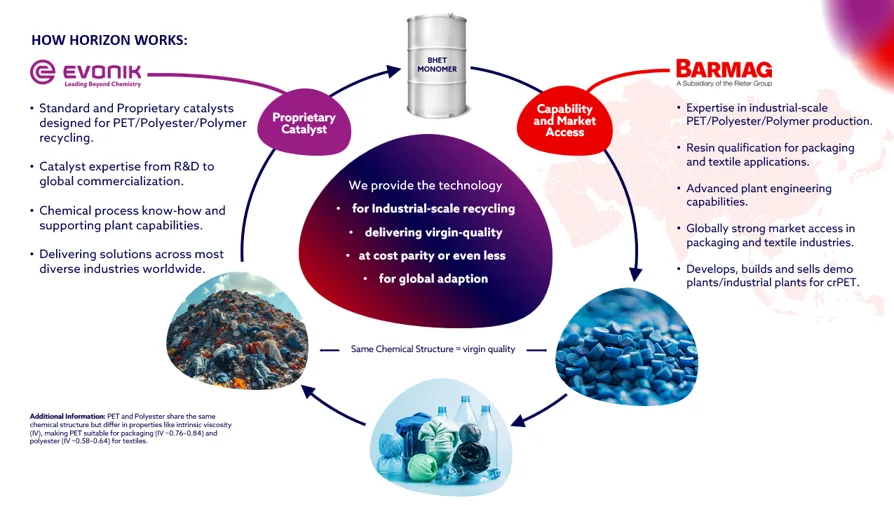
Evonik and Barmag have announced their cooperation to promote the chemical recycling of polyethylene terephthalate (PET) waste, a type of polyester widely used in textile fibres.
The collaboration combines expertise to develop technologies that transform polyester textile waste into high-quality raw materials that can be used to make new polyester products. These new processes are designed to complement existing mechanical recycling methods, making it possible to recover valuable material from heavily contaminated or mixed polyester waste that would otherwise be sent to landfill or incineration.
This approach recognises that textile recycling is a complex challenge involving multiple steps, from the quality of waste streams and purification processes to polymer production and fibre manufacturing. Improving each stage helps create a more reliable pathway for turning discarded textiles into new resources.
By increasing the availability of recycled raw materials, these solutions aim to support a more circular textile economy and reduce reliance on virgin fossil-based resources.
The partnership also highlights the importance of collaboration across the textile value chain. Bringing together different areas of expertise is key to addressing the challenges of recycling polyester textiles at scale.
Partners for circularity