







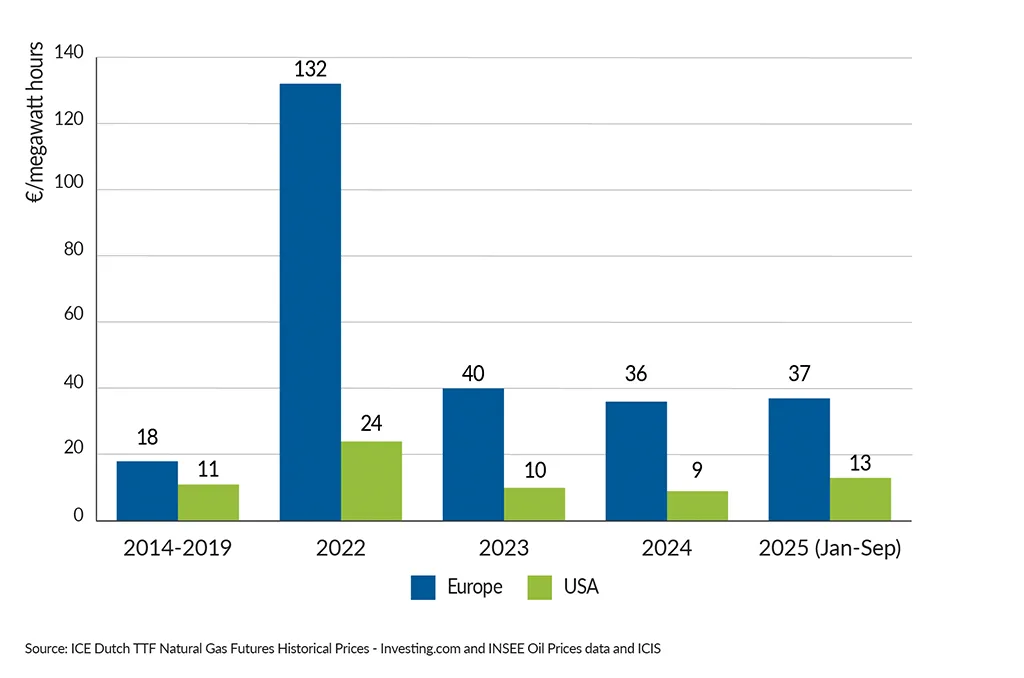
The chemical industry is energy-intensive using about 25 to 50% of the natural gas it purchases as raw material, while the rest is used to generate steam and power for plants and processes. Chemicals are therefore highly impacted by gas prices. Access to reliable and competitive energy sources is essential to maintain competitiveness. Key upstream basic organic and inorganic chemicals, such as ethylene, propylene, ammonia, chlorine, and alkalis, are based on energy-intensive processes. At global level, gas prices in Europe were three times higher than those in the USA, placing Europe at a competitive disadvantage. The gap in natural gas prices between Europe and its competitors is projected to remain substantial between 2025 to 2030, further weakening the European industry’s competitive position in global chemical markets.
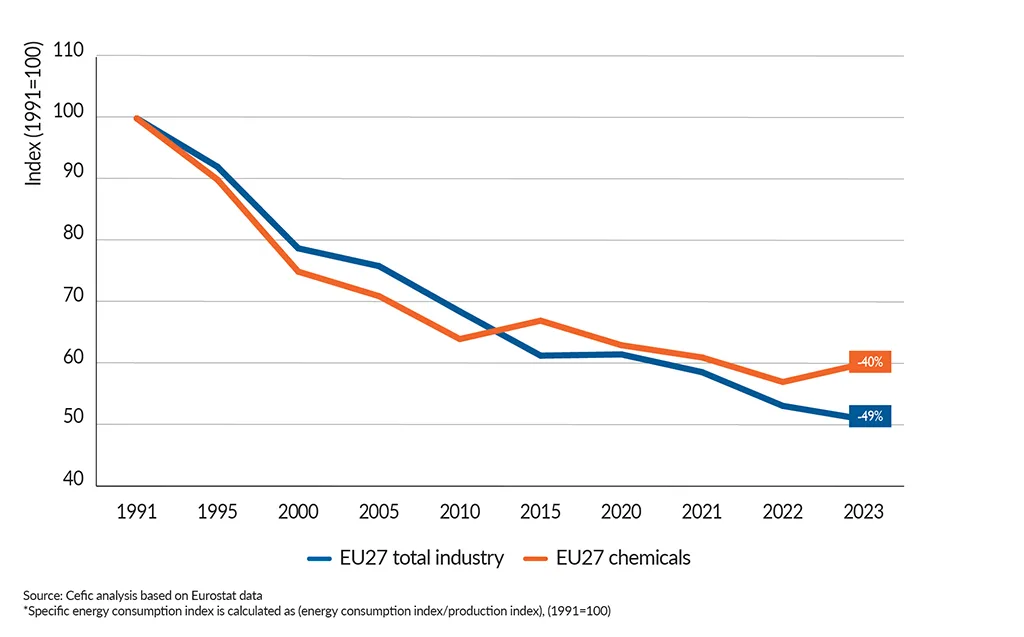
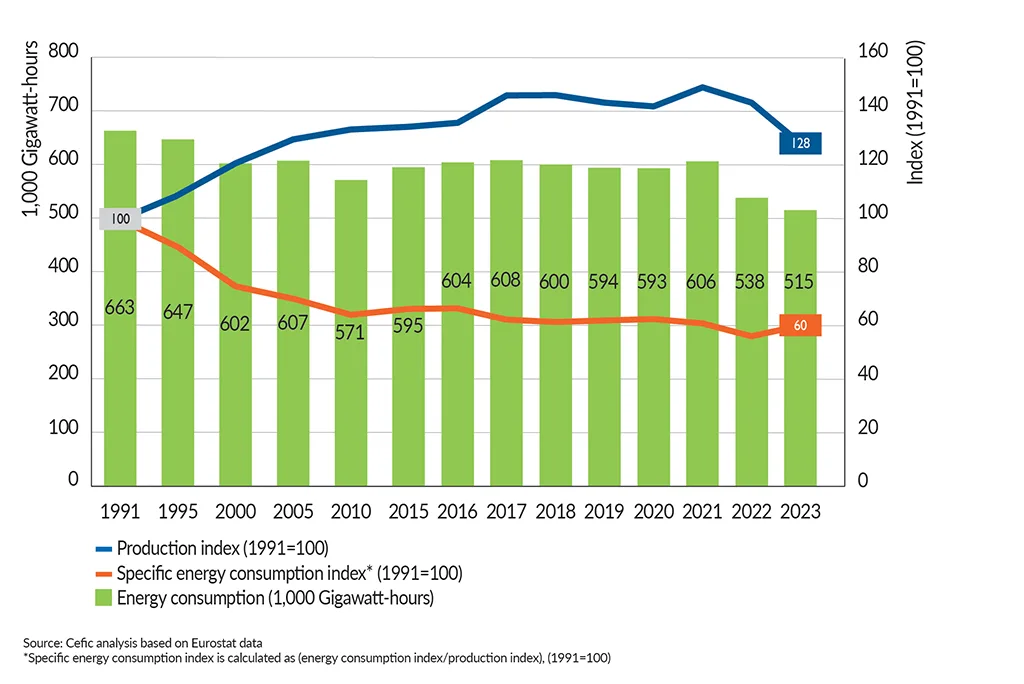
The chemical sector has played a pioneering role in enhancing energy efficiency, achieving a 40% reduction in specific energy consumption since 1990. This commitment to energy efficiency extends to optimising processes, including the construction of new facilities. Additionally, a notable portion of the energy used by the chemical industry as feedstock is stored in products and remains recyclable. Achieving further substantial improvements would require technological breakthroughs.
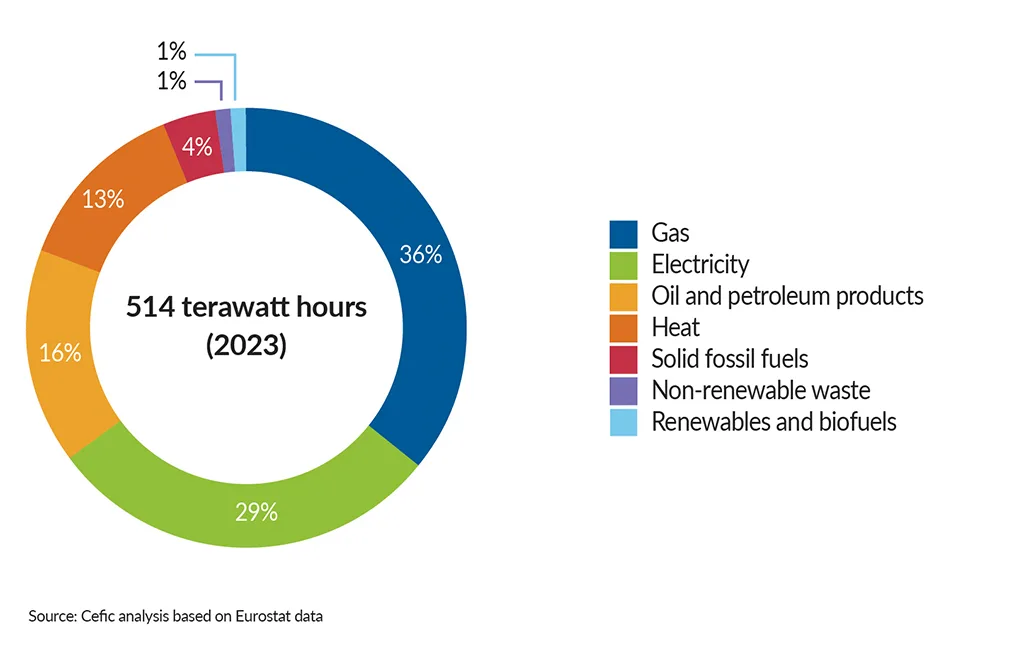
EU27 gas and electricity account for two thirds of total energy consumption of the sector
Total energy consumption in the EU27 chemical industry by source (2023)
Gas prices remain above the pre-crisis levels
Natural gas prices: Europe vs USA (€/megawatt hours)
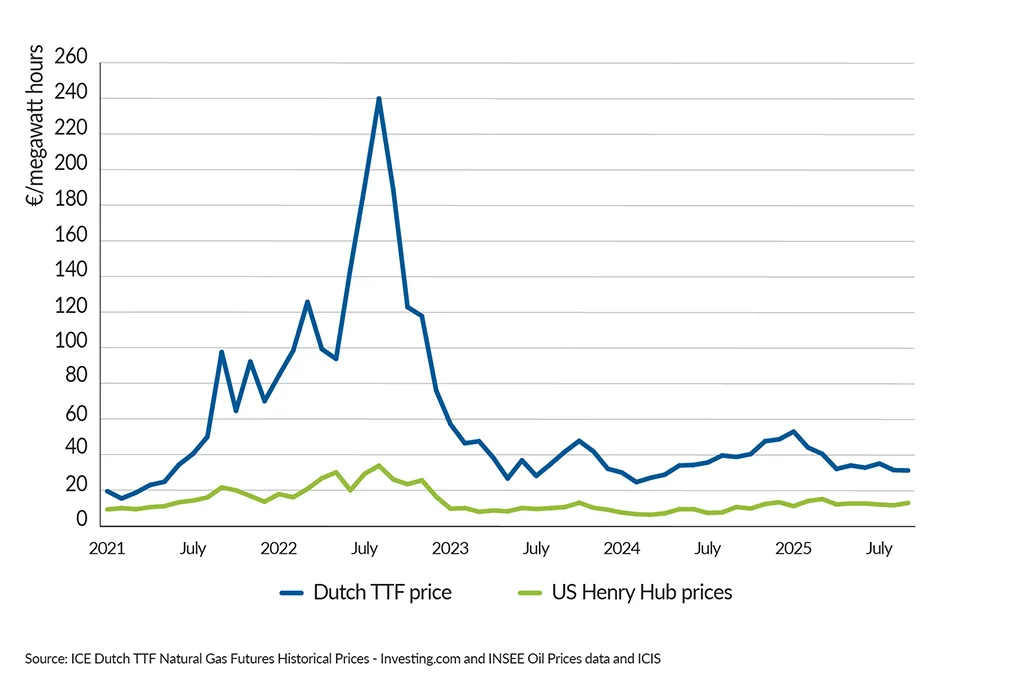
Natural gas prices: Europe vs USA (€/megawatt hours)
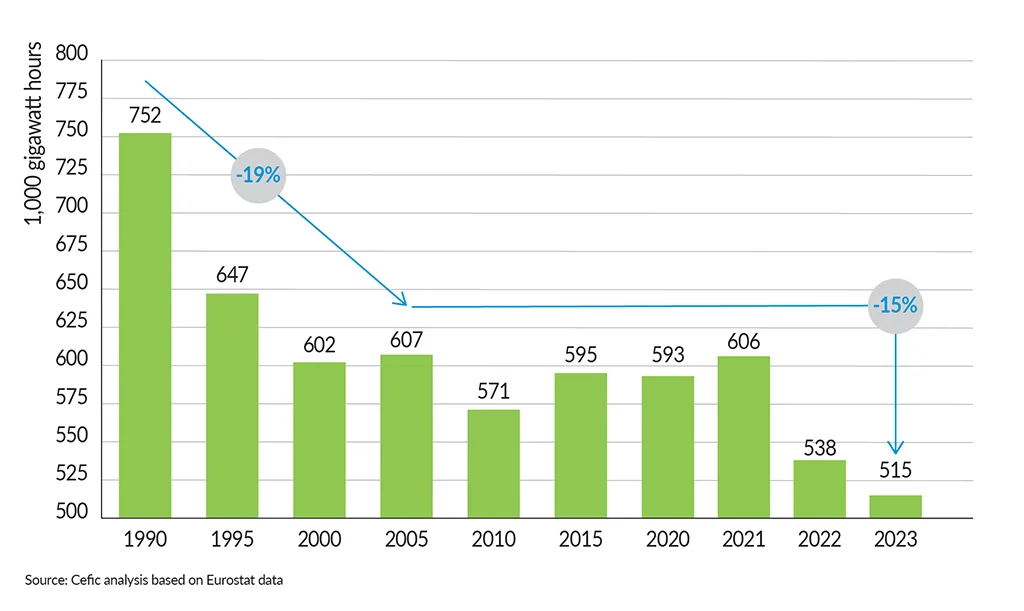
EU27 energy consumption fell by 32% since 1990
Energy consumption in the EU27 chemical industry (thousand gigawatt hours)
EU27 specific energy consumption* dropped by 40% since 1991
Efficient use of energy in the EU27 chemical industry
EU27 chemical specific energy consumption* is higher than overall industry
Specific energy consumption*: Chemicals versus total industry