

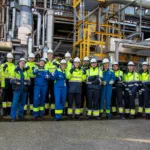







This project has been recognised as a commendation of the 2025 Responsible Care Awards.
Through advanced refill systems, lightweight packaging, and breakthrough film-to-film recycling technologies, the “Plastic Reduction and Circular Economy Initiative” by Kao demonstrates how industrial innovation and collaboration can drastically cut plastic use and waste while maintaining product performance and consumer convenience.
Transforming packaging through reuse
Over the past three decades, these innovations have achieved an approximately 78 % cumulative reduction in plastic use through a combination of lighter packaging, refill formats, and reuse systems. Refill and replacement packs – including flexible pouches, collapsible bottles, and smart dispensing systems – could cut plastic use by up to 80 % per product and reduce packaging-related carbon emissions by up to 66 %.
Initially developed in Japan, these solutions are now being scaled globally, offering sustainable alternatives for both consumer and professional markets. Refill packs for haircare and personal care brands in Europe, for instance, are already reducing the material footprint of everyday products.
Breakthrough film-to-film recycling
A world-first film-to-film recycling technology marks a major milestone for circular packaging. The process enables used refill films – typically multilayer materials once considered unrecyclable – to be transformed into new film packaging.
This innovation combines advanced filtration, optimized temperature control, and a compatibilising agent jointly developed with industry partners, ensuring a smooth, high-quality recycled film. The first product featuring this recycled material was launched in Japan in 2023, setting a new standard for flexible packaging circularity.
Creating new value from used plastics
The initiative also drives material recycling through the RecyCreation program, which collects used refill packs and converts them into community materials such as recycled resin “Okaeri-blocks” for use in urban design and environmental education. In practice, collected used refill packs are cleaned, shredded, and processed into recycled resin.
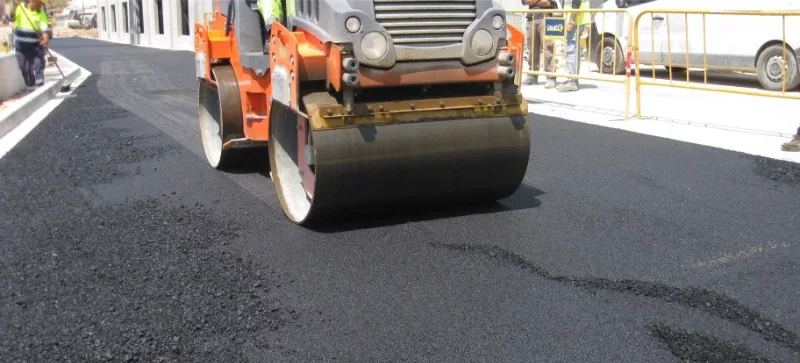
In parallel, waste plastics are repurposed into “NEWTLAC”, a high-durability asphalt modifier that extends pavement life and reduces CO₂ emissions from road maintenance. This technology has been deployed across Europe, the United States, and Asia, highlighting the global potential of circular solutions. In this process, waste PET bottles are used as the raw material and transformed—using Kao’s technologies in interface science—into a functional additive that enhances the affinity between asphalt and aggregate. This is a form of recycling, in which waste materials are converted into higher-value products rather than being treated as by-products.
Impact and recognition
Recognised by local authorities as a flagship circular economy initiative, the project exemplifies how innovation, collaboration, and consumer participation can drive measurable progress toward eliminating plastic waste.