


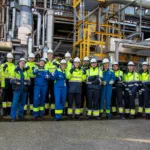







This project has been recognised as a **winner** of the 2025 Responsible Care Awards.
Since 2022, Clariant has embedded sustainability into its governance, linked incentives to performance, reshaped its portfolio, and built systems that make impact measurable across the value chain. The company integrates sustainability directly into portfolio steering through the Portfolio Value Program, which assesses all products against 39 sustainability indicators—covering areas such as climate, water, bioeconomy, circularity, waste and pollution, safety, social value creation, performance, and more—across the full life cycle.
To provide reliable carbon data, for instance, Clariant developed CliMate tool, a Product Carbon Footprint calculator certified by TÜV Rheinland, covering 79% of global sales. Combined with supplier-specific emissions data covering more than 30% of raw-material emissions, customers receive transparent, science-based information for their own decision-making. More than 1,000 employees are trained to use these insights in commercial engagements, contributing to recognition such as the SAP Quality Award.

Innovative chemistry: Embedding sustainability in R&D and product development
Through the Idea to Market (i2M) process, every R&D project undergoes a structured sustainability review before moving forward. Three Innovation Arenas, Health- and Sustainability-Conscious Consumers, Energy Transition, and Circularity, ensure alignment with global trends and customer needs.
Digital tools such as Clarita and ClariCoat help scientists design safer and more sustainable formulations, supported by a comprehensive toxicology database. This integration has enabled proactive replacement of hazardous solvents and strengthened responsible innovation. The approach has been recognized internally through the 2025 Innovation & Sustainability Awards, and externally through BSB, In-Cosmetics® fair , and recognition such as the 2024 Cefic Responsible Care Digitalization & Innovation Award.
Leading in Sustainability: Making transformation measurable
Sustainability is anchored at board level and reinforced by incentive structures that include climate and safety metrics. Clariant’s Science-Based Targets commit to reducing Scope 1 and 2 emissions by 46.9% and Scope 3 by 27.5% by 2030.
Significant progress is already visible: since 2019, Scope 1 and 2 emissions have decreased by 35% (driven by energy-efficiency measures, green electricity, and the use of renewables), raw-material emissions have dropped by 26% (through the use of lower-carbon, recycled, or biobased raw materials), and 67% of the company’s electricity now comes from renewable sources.
The company operates its first Net Zero site in India, while all sites continue to achieve long-term reductions in energy, emissions, water consumption and waste. These results underpin strong ESG ratings—including CDP Climate Change A-, EcoVadis top 1%, and MSCI AA— and Syngenta sustainability award.
People Engagement: Enabling ownership and culture change
Clariant strengthens culture through learning, inclusion, and safety. Learning Wednesdays reached 7,300 employees in their first year, supported by the global Percipio platform. Employee Resource Groups like Women Inclusion Network (WIN) and PRIDE enhance inclusion across regions. The global Living Wage Initiative further strengthens this commitment by ensuring all employees earn a wage that covers essential living costs.
Safety is embedded through the ESHA Risk Management System and digital Evidence Check tool, and sustainability and safety KPIs are part of performance goals for all eligible employees. This disciplined approach has driven a 54% reduction in Total Recordable Accident Rate since 2022 and more than two million safe hours. Our people-focused culture is reflected in our global employee Net Promoter Score survey, which showed 83% engagement.