









Building insulation not only keeps your home cozy but also helps reduce your carbon footprint and contributes to climate protection. A new material with a unique combination of properties now simplifies the energy-efficient insulation of buildings: a mineral-based clay foam insulation system, developed by BASF for double-leaf masonry buildings. It significantly improves energy efficiency, reduces CO₂ emissions, and creates a pleasant living environment.
How it works
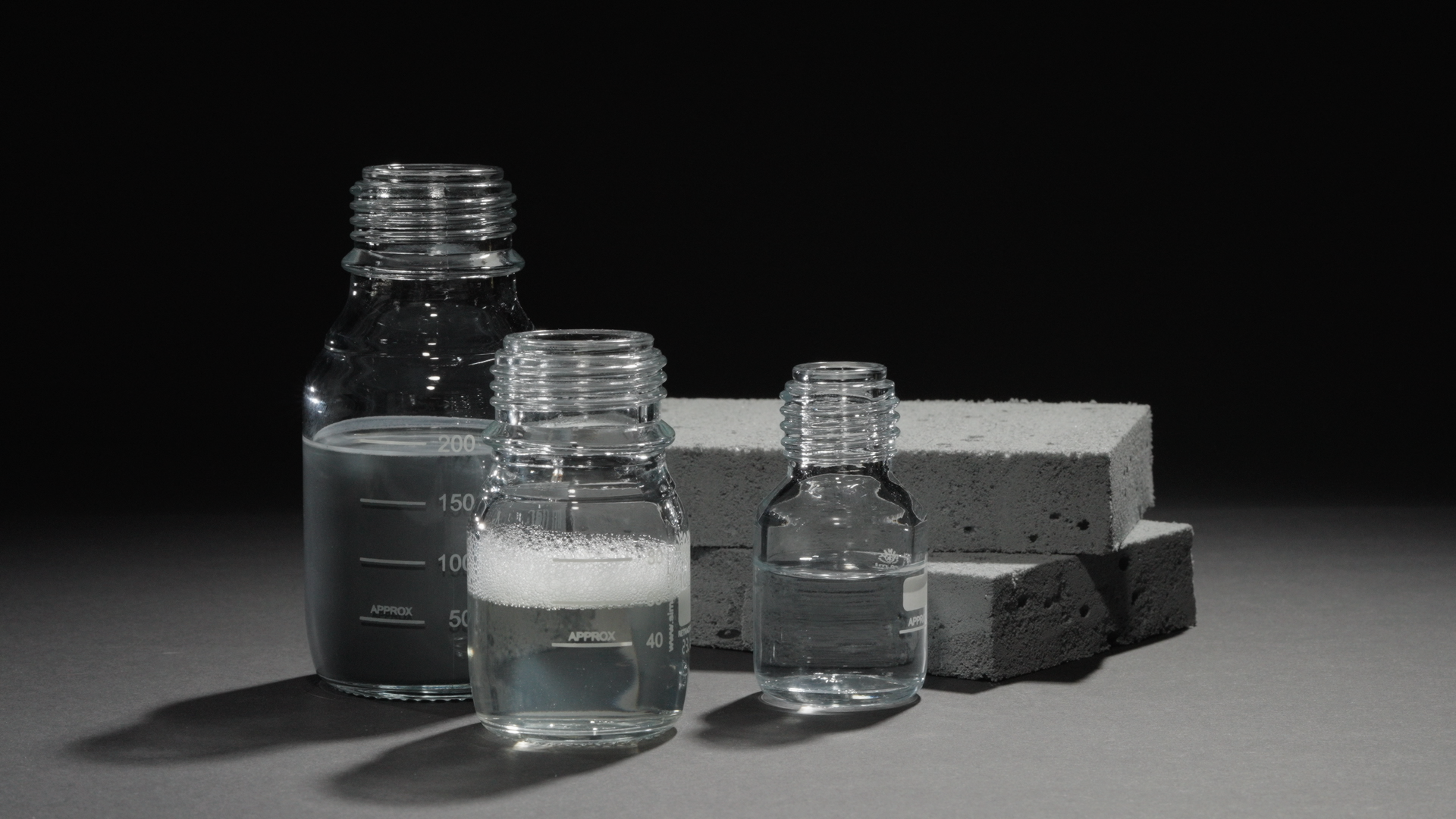
Clay foam is produced using a specially developed machine and three water-based components in a continuous, automated process directly on the construction site. First, the template component containing surfactants is foamed by compressed air. This creates a fine soap foam with many small bubbles. The filler component is then mixed in. It consists of clay minerals and a binding agent which is approved for use with food packaging. The mineral particles and the binding agent then settle homogenously on the lamellae of the soap foam. In the final step, a cross-linking agent is added to initiate the setting reaction with the binding agent.
After production, there is a processing window of about two minutes during which the flowable foam is introduced into cavities and fills them completely. There, the clay foam sets and dries constantly over a period of two to four months, releasing moisture slowly in the form of water vapour, thereby eliminating the risk of moisture or water accumulation. Once dried, the foam consists of 90% mineral components and is non-combustible, sound-absorbing, water-repellent yet still vapour permeable, and provides efficient insulation. Using the breathable clay foam protects buildings against fire, wind-driven rain, and extreme temperatures and ensures a pleasant, healthy indoor climate. Clay foam is awarded with the EMICODE® EC1PLUS label as a very low-emission building product.
Circularity considered right from the start
When a building is being renovated or has reached the end of its life cycle, clay foam can be recycled as a subgrade material without the need for time-consuming separation from the rest of the construction waste. It is even possible to re-use clay foam in a closed loop as raw material to produce new clay foam.
Clay foam is now also approved for insulating roofs and ceilings and opens new possibilities for the construction sector. Certified distribution partners in Germany, the Netherlands, Ireland, Belgium, UK and Italy have already successfully insulated more than 2,000 houses with clay foam, contributing to decreasing their carbon footprint and improved living comfort.